
Columbus, OH – U.S. Trotting Association Directors Joe Faraldo and Mike Torcello were joined by other harness racing representatives as well as spokespeople for Thoroughbred organizations in raising concerns for the future of racing in New York before two Assembly Committees.
The horse racing advocates appeared before the New York Assembly’s Committee on Racing and Wagering, and the Committee on Economic Development, Job Creation, Commerce and Industry in a hearing held on Nov. 21.
Among concerns expressed to legislators were a decrease in live race days, the expansion of computer-assisted wagering (CAW) and the inability to wager on horse racing through mobile sports-betting sites.
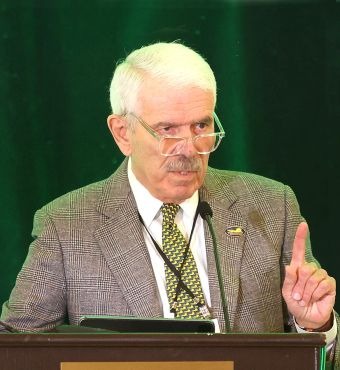
Faraldo explained how expenses remain the same while income decreases for thousands of those employed by the harness racing industry, which hurts the agricultural economy that supports it with fewer racing opportunities while the elimination of race dates only helps the track operators.
“You can’t just be feeding horses every day and have no money coming in,” said Faraldo, who serves as president of the Standardbred Owners Association of New York and Empire State Harness Horsemen’s Alliance. “You can’t allow a reduction in minimum race days – and every track operator wants that.”
In 2001, New York authorized the installation of video lottery terminals (VLT) at harness tracks in the state that provide additional revenue, which has led to an increase in jobs for track employees, breeders, trainers, caretakers, veterinarians as well as others and growth of the industry while benefiting the state’s agricultural economy.

Mike Torcello, president of the Western New York Harness Horseman’s Association, which represents horsemen at Buffalo Raceway and Batavia Downs warned that the industry should not take a step backwards.
“It has been a great thing for racing in New York,” said Torcello. “And now to try to backtrack on it and race less days and put some people potentially out of business by racing less days, that would be a shame to see that happen.”
While weather and track conditions during the winter in upstate New York are challenging and have caused many cancellations, Batavia Downs has raced during January and February for the past three years after acquiring those dates from Buffalo Raceway.
In 2026, Batavia Downs will not host their usual winter race dates during those months, which Torcello emphasized is necessary for his members to race and make a living.
“You can’t just put horses away like your summer car,” said Torcello. “They have to continue to eat and continue to get trained and continue to be cared for.”
Faraldo called for regulatory controls as he warned about the proliferation of computer-assisted wagering, which utilizes software algorithms to place large sums of money into the betting pools right before betting is halted. Since betting on horse racing is pari-mutuel, the large wagers often significantly alter the odds on the horses in the races at the last minute, which hurts the smaller bettors.
“Because when these so-called whales eat all the minnows and take all of the feed, if you will, out of the sport, all of the money out of the sport, who is going to be left?” asked Faraldo. “They are going to suck all the money out of this game and then there won’t be a game left.”
Faraldo also explained that being excluded from wagering on mobile sports betting platforms is hurting the harness racing industry and urged the legislators to pass laws that would allow horse racing to be included.