
Marcus Melander reflects on a career-best season
From the time he was a teenager, Marcus Melander was focused on a career in harness racing. Growing up in Sweden, he raced ponies until he was 16 years old, at which point he left school to work for his uncle, Hambletonian winner and future Swedish Trotting Hall of Famer Stefan Melander, and began to make his own name in the sport.
When he was 19, Melander won Sweden’s equivalent of the Rising Star Award for his success as a young driver before eventually moving to the U.S., where he worked for a year under another Hall of Famer, Jimmy Takter, in New Jersey. Near the end of 2014, Melander started his own stable on a farm previously home to the legendary Stanley Dancer in New Egypt, N.J., that had been purchased by his family.
Since then, the now 33-year-old Melander has captured 727 races – including many of North America’s most prestigious trotting events – and earned more than $43 million in purses as an award-winning trainer. But it was during those formative early years that he saw his career take shape.
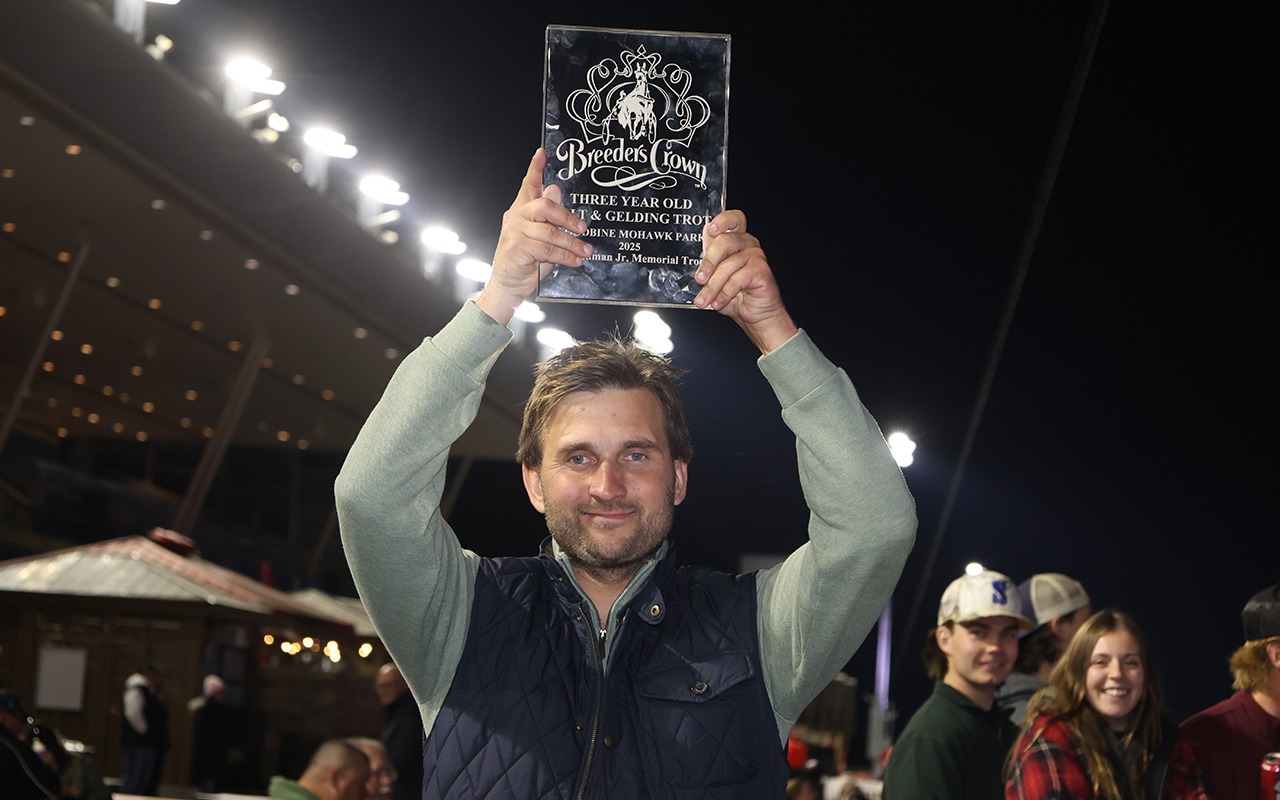
“I’m very fortunate that I had the opportunity to work for my uncle and Jimmy,” Melander said. “They are two great horsemen. I learned a lot from both of them.
“When I was younger, I really enjoyed driving. That was probably what I was most excited about, to come [to the U.S.] and drive over here. Not that I expected to come here and start driving in a lot of races just like that, but I drove quite a lot in Sweden before I moved. When I worked for Jimmy, I drove a couple of races that year, but not so much. Working for him, the most important thing was to learn as much as possible.
“Then, when I began as a trainer, I drove a lot of my own horses, but I grew away from that and I’m not too keen on driving anymore. There are so many good guys out there that I don’t think I need to do that.”
Melander totaled 267 races in the sulky during his first two seasons as a trainer but transitioned away from driving in 2017. That proved to be a breakout year for Melander as his stable earned $1.3 million in purses, in addition to seeing 2-year-old trotting colt Fourth Dimension earn a divisional Dan Patch Award and 3-year-old trotting colt Enterprise win a Hambletonian Stakes elimination before ending up third in the $1 million final.
The following year, Melander was named the U.S. Harness Writers Association’s Rising Star Award winner, and in 2019 he became, at the age of 27, the youngest person to receive the Trainer of the Year Award from USHWA. His stars during those two seasons included Dan Patch Award-winning trotting colts Gimpanzee and Greenshoe, and he counted the MGM Yonkers International Trot, Maple Leaf Trot, William Wellwood Memorial, MGM Yonkers Trot, Canadian Trotting Classic, Kentucky Futurity, Jim Doherty Memorial and two Breeders Crowns among his 136 wins during that span.
Melander’s horses banked over $5.3 million in purses in 2019, good for fourth among all trainers in North America, and his stable remained a force in the ensuing seasons, topping $3.7 million from 2020 through 2023. In 2024, he won 100 races for the first time in a year, finishing with 104, and set a then-career high with more than $6.7 million in purses.
Which brings us to last year, when Melander rewrote his personal records, with 120 wins and over $9.8 million in purses. Melander’s earnings were second to only record-breaking 2025 Trainer of the Year Ron Burke (nearly $31.5 million) as he became just the fifth conditioner in history to surpass $9.8 million in a season. His stable won 27 races worth at least $100,000 – with 12 different horses getting to the winner’s circle in those events – and averaged $15,839 per start.
“It was a great year,” said Melander, who had 75 horses in his stable last season. “I’m very happy. We won a lot of the races we were in, and we were always right there in the others. We averaged over $15,000, which is something I like to work for – to try to keep the average as high as possible.
“That we made $9.8 million and had an average that high is because we had such good depth. The only division where we were a little short maybe was the 3-year-old filly trotters. But overall, the 2-year-olds were good, the 3-year-olds were good, and then we had the older ones, as well. It was fantastic.”
Melander trained four of the five richest 2-year-old trotters in 2025: colts Apex (a division-best $871,798) and Spencer Hanover ($649,889), and fillies Setyoursightshigh (a division-leading $678,159) and Nezuko Kamado S ($549,064). Apex and Setyoursightshigh were divisional Dan Patch Award recipients, and Spencer Hanover was a Breeders Crown champion.
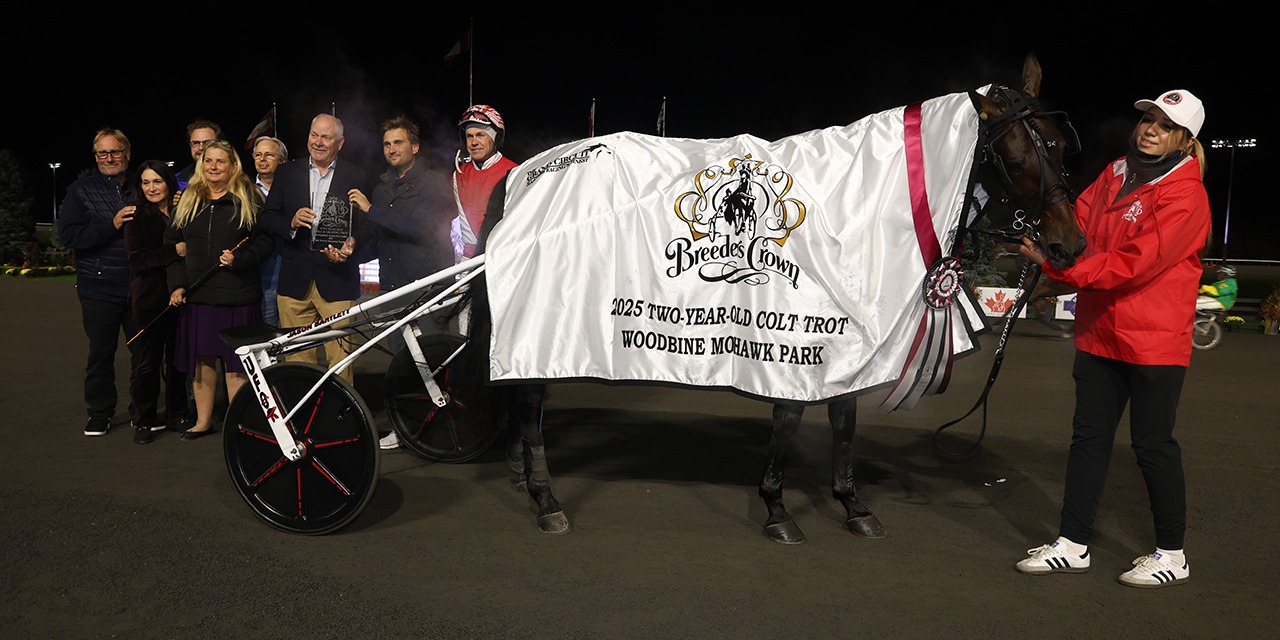
He also trained three of the top six money-winning 3-year-old male trotters: Dan Patch Award-winner Super Chapter (a division-best $1.2 million), Breeders Crown champion Meshuggah ($591,927) and Maryland ($491,960).
Furthermore, male trotters Periculum ($838,902) and Aetos Kronos S ($294,134) finished second and 12th, respectively, in earnings among all older trotters. Both are slated to return to the races this year, as is Meshuggah, among Melander’s older horses.
Melander’s two Breeders Crown triumphs gave him a career total of seven trophies in the series, good for 15th place among all trainers in the history of the event. In addition, Apex won the Mohawk Million and Peter Haughton Memorial, giving Melander back-to-back victories in the two Grade 1 stakes and three triumphs in the past four years in both races.
Other top moments for Melander included Super Chapter becoming history’s fastest 3-year-old trotter on a five-eighths-mile track thanks to his 1:50 win in the Earl Beal Jr. Memorial at Pocono Downs at Mohegan Pennsylvania; winning a third career Yonkers Trot, also courtesy of Super Chapter; and taking the John Cashman Memorial with Periculum.
“It’s hard to pick just one thing that stood out,” Melander said. “Obviously, there’s winning two Breeders Crowns. We’ve been fortunate to win a couple of them before, but one at a time. This year, we won two, and we had some other horses that raced great that weekend. Super Chapter in the Earl Beal – nobody really talks about that race, but he set a new world record. But if I had to pick, I’d probably say Apex in the Mohawk Million.”
The Mohawk Million field at Woodbine Mohawk Park on Sept. 20, 2025, featured Apex, Kentucky Sire Stakes Championship Series winner Endurance, William Wellwood Memorial champ Ardonne, Pennsylvania Sire Stakes champion Dublin Hanover, New York Sire Stakes winner AI, and Grand Circuit winners Diabolic Hill and Silverstein.
Apex, the New Jersey Sire Stakes champion, won by 1-1/2 lengths over Endurance in a Canadian record 1:51.4.
“All the best 2-year-olds at that time were there,” Melander said. “You had all the champions in there, and he just crushed them from first-over. His performance that night was fantastic. The way he raced that night showed how good he was.”
Apex’s Dan Patch Award was Melander’s second in a row with a 2-year-old trotting colt, joining Maryland in 2024. Setyoursightshigh’s Dan Patch honor gave him a sweep of the freshman trotting divisions last year. Setyoursightshigh, sired by In Range, was an Ohio Sires Stakes champion and Melander’s first-ever Ohio eligible.
“We trained In Range, so we bought one,” Melander said, adding with a laugh, “And she turned out to be pretty good.”
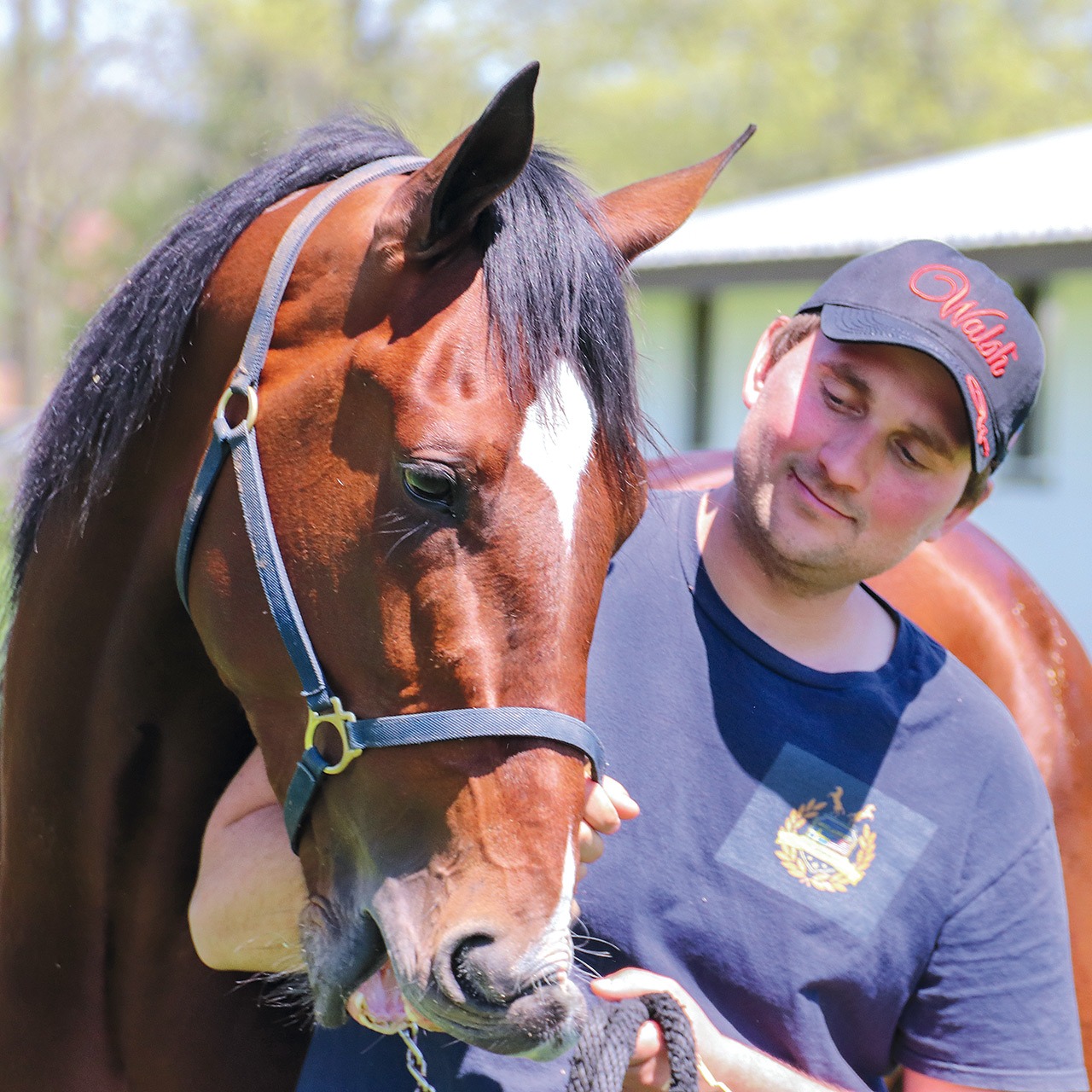
Working with 2-year-olds is something which Melander believes he has improved over the course of his career.
“When I was younger, I think I went too fast with training them down,” he said. “They’re so talented these days, you just have to keep maintaining them and give them a lot of miles. I don’t go as fast as I did a couple of years ago. In this business, there is always room to learn and improve.”
Another key for Melander has been to try to keep a relaxed presence, no matter the circumstances.
“I try to stay calm,” Melander said. “When we go to the races, I think it’s important. I’ve done everything I can at home, and I’m confident in the horses. If people see I’m nervous, that’s not going to go well. I know it’s another day tomorrow. Like the Hambletonian, we’ve finished second four times, but the Hambo comes next year again, we just give it another try. You just turn the page.
“Plus, there is so much racing during the season, you can’t just bury your head in the pillow and think about the races that were raced already. It doesn’t work like that. You just turn the page and get to the next one.”
Having a supportive group of owners also is beneficial.
“I’m very fortunate to have great owners to work with,” Melander said. “It makes my job easier. You feel pressure [to succeed] but at the same time you don’t feel pressure because you know that they’re behind you. It’s a lot of great people and I’m thankful to all of them that they want to have horses with us and let us work with their horses.”
Melander, who has a farm in Kentucky in addition to New Jersey, maintains a busy schedule during the stakes season, but a team of around two dozen people and the assistance of family members, including his brother, Mattias, keep the operation moving forward. This year, Melander will train a stable of 85 horses.
“I think I’ve managed to build it up steadily,” Melander said about the stable. “We had 40 for a couple of years, then we had 60 for a couple of years, and now last year we had 75. A couple of years ago, I wouldn’t have said that I wanted to have 85-plus horses, but right now 85 is a good number. We have very good help, which also is something that’s very important. So, right now, with 85, I feel comfortable.
“I enjoy it,” he added about the schedule. “It’s a lot of races, but I don’t race during the wintertime, so I’m fully charged when we start back again [in the spring]. We’re not racing for five or six months, and you’re excited again. We can’t really say it’s work. We love the horses, and we’re doing what we love. Of course, it’s still racing, so if you lose a race, you get disappointed sometimes, but we’re very fortunate to work doing something we love.”
And as Melander prepares for another campaign in 2026, he knows all the numbers compiled last year are in the past.
“It all says zero now,” he said. “Now, we have to go out and do it again.”
This story appears in the February 2026 issue of Hoof Beats, the official magazine of the USTA. To learn more, or to become a subscriber to harness racing’s premier monthly publication, click here.