
No matter his role, Dr. Andy Roberts speaks up for the sport
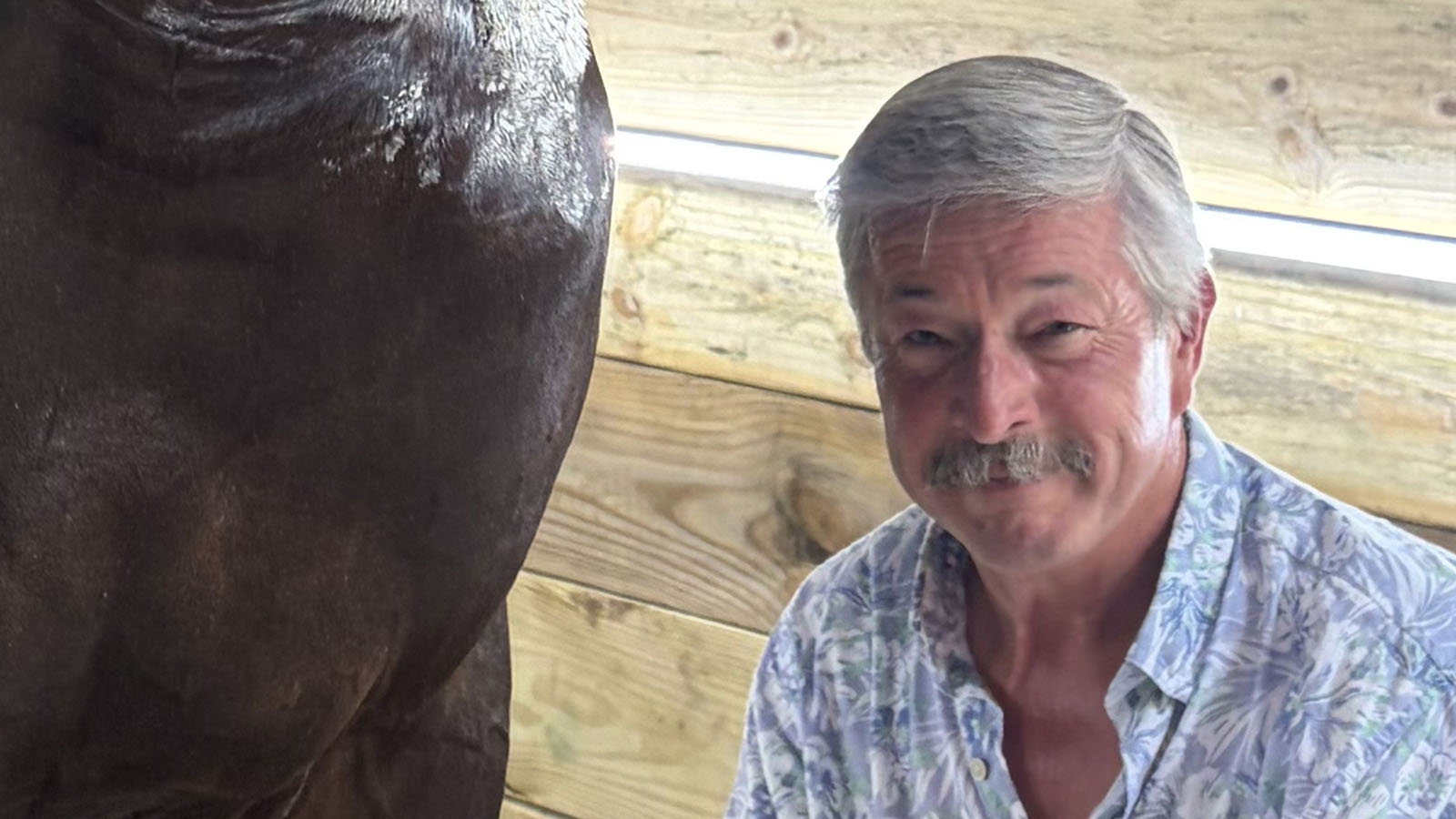
When it comes to how Andy Roberts, DVM, feels about the Horseracing Integrity and Safety Authority (HISA), the USTA director and treasurer not only talks the talk but walks the walk.
Or, in his case, walks away.
A lifelong equine enthusiast, Roberts practices large animal veterinary medicine on Standardbred racehorses in Kentucky and races Thoroughbreds elsewhere — specifically in Ontario and Louisiana. What do those two locales have in common? Neither is under HISA’s jurisdiction.
Roberts, 59, has been working on uniform medication regulation since he graduated from The Ohio State University, became a veterinarian, and moved to Kentucky in the mid-1990s.
“HISA is just clearly not the way to do it,” he said. “Has it caught any cheaters? No. They have not developed a single test that actually tries to identify threats to our business.”
That last phrase matters to him, because Roberts does not oppose enforcement. He wants it.
“Integrity is something we need to guard,” he said. “I don’t like to work with people who have a negative reputation, because that affects mine. It’s absolutely needed.”
Where HISA trips up Roberts and many of his harness racing colleagues who have opposed federal intervention via HISA is that such bureaucratic regulation focuses on paperwork instead of the mission — pulling practitioners into an orbit that circles far beyond the racetrack.
As a personal example, Roberts will not provide any services to a Thoroughbred once it’s named because that would require him being a covered person under HISA’s rules, which in turn would bring the things he uses for work — such as his truck — under HISA’s purview.
“Isoxsuprine is the perfect example of HISA overstepping its bounds,” Roberts said. “It’s a vasodilator that faded from human medicine because better options came along for humans, but it is still an effective treatment for horses. I use it on Standardbreds, but, as a covered person, could get into trouble for having it at all.”
Roberts is not merely objecting from the sidelines. He serves on the Harness Racing Medication Collaborative (HRMC), the USTA-convened body that has spent the past several years doing the work he says HISA hasn’t: setting no-effect thresholds for individual substances based on published, peer-reviewed research rather than on how a positive test will read in a headline.
A recent metformin case is the one he points to. A diabetes drug used by millions of people, metformin turns up in horses that never received it — carried in on a groom’s hands, a water bucket, a bag of feed. On Roberts’ motion, HRMC adopted an irrelevant plasma concentration of 5 nanograms per milliliter (ng/mL). The Horseracing Integrity and Welfare Unit subsequently stayed its metformin prosecutions and moved toward a threshold of its own.
The distinction matters to him because the alternative is a horseperson losing a purse over a substance that never affected a race. HRMC has also endorsed putting an ion mobility mass spectrometer in the New York Equine Drug Testing and Research Laboratory, which handles all drug testing for horses competing at New York’s seven Standardbred racetracks. Such equipment can find substances nobody currently tests for. Rigor, in Roberts’ framing, is supposed to cut in both directions.
Roberts’ anti-HISA stance has extended beyond his professional involvement with the sport and into his participation in it as an owner, given that he only races Thoroughbreds in jurisdictions outside HISA’s scope.
“Capital goes where it’s treated best,” he said. “You don’t treat me well, I’m going to move. I’ve invested in Ontario because I feel an additional level of safety there.”
Whereas HISA has poorly addressed the known problem of lack of uniformity in medication regulation and welfare considerations, Roberts notes the industry has done a poor job in ensuring there are regulators and practitioners to keep the game moving forward.
His “capital goes where it’s treated best” line is a great segue into that problem because he knows there is capital, but what kind of infrastructure is the sport asking people to invest into?
“Investing is the part doing well,” he said. “The money is there. But you need people to work the capital.”
Kentucky is the clearest illustration. Thanks in part to the influx of revenue brought on by historical horse racing machines, the commonwealth’s Standardbred racing and breeding programs have gone from an afterthought to a magnet in barely a decade, and Roberts has had a front row view of the growth while also observing that the workforce hasn’t — pardon the pun — kept pace.
Every year, he makes the trip to Oak Grove Racing & Gaming, in the southwestern corner of the commonwealth. Not because the 3½-hour journey is convenient, but because veterinarians in the area will not work on horses.
The shortage has attracted the attention of Governor Andy Beshear’s administration, which convened a working group on the large-animal veterinary shortage in Kentucky. Roberts has served on that task force and has a clear message for attracting equine practitioners:
“One thing you can’t do is make our life worse,” he said.
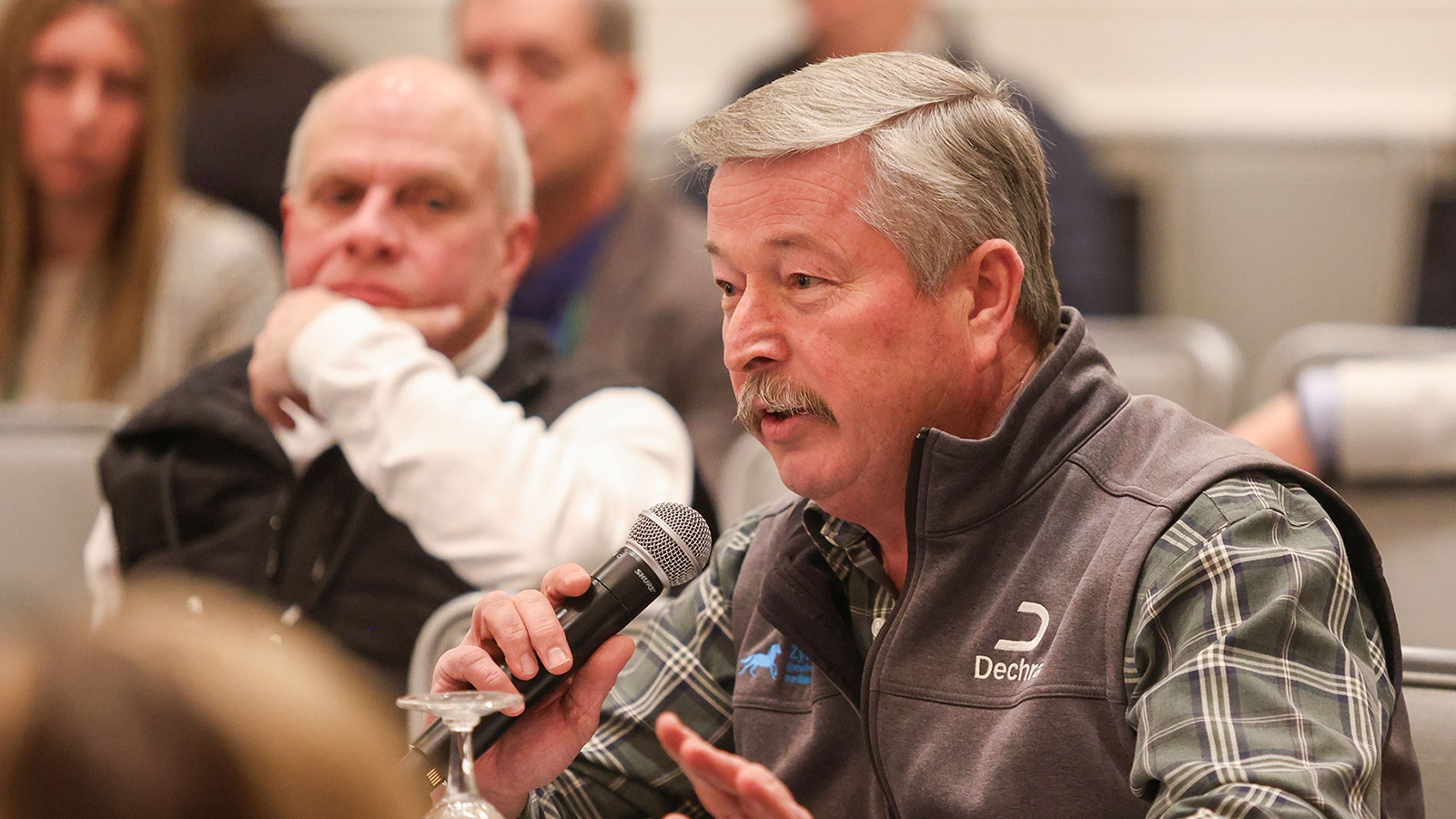
The pipeline problem starts before veterinary school and has been misdiagnosed for a generation. His white paper on the subject was written for Kentucky, but he says the prescription is the same anywhere.
“You need to admit kids with an agriculture background,” he said. “Cultivate that they’re serving a mission from high school. Recruit from 4-H and Future Farmers of America and the events they’re at.”
The students who arrive at veterinary school who already spent summers on a farm are the ones who don’t flinch at the reality of the job.
“Top horsemen require a top level of service,” Roberts said. “People coming out of vet school don’t want to work seven days a week. They don’t want to do 14-, 16-, 18-hour days.”
Some practices have responded by platooning — rotating veterinarians so no one carries the whole week. Roberts understands the math and doesn’t blame anyone for it. He also knows what it costs.
“Clients don’t love that,” he said. “You have to accept it, but people like their regular guy. They’re not as happy with somebody they’re not as comfortable with.”
Roberts came to the profession sideways, which may be why he thinks so much about who gets in the door. He wanted to be a driver, but it was clear early that he was not going to be the next John Campbell.
“I needed a plan B,” he said. “A lot of being a big catch driver is knowing how to deal with people.”
That skill turned out to be transferable, though he didn’t know it at the time. An associate dean asked him why he wasn’t going to medical school — he had the grades and the background after graduating from Cornell University. He wanted to focus on animals, not people, but found the hardest part of that vocation was still people, not animal physiology.
“Talking to an owner — nothing technical, just what’s happening — explaining news they don’t want to hear while helping them get excited about the path forward has taught me a lot about dealing with people,” Roberts said. “Going into vet school it wasn’t a strength; it’s part of why I didn’t think I could ever be a driver or trainer, but I’ve learned how to do that.”
He was advised against Kentucky, too. He wanted to move to the horse capital of the world; people told him Kentucky underpaid, which at the time was true, but Ohio State turned out to be its own path to Kentucky. He was taught by Larry Bramlage, who would later join Rood & Riddle Equine Hospital in Lexington, Ky., and by Al Ruggles, who followed him there. Roberts still sends his surgical referrals to Ruggles today.
“If you think I’m stupid, that’s fine because that means I’m just stupid,” Roberts said. “I was taught by the best of the best in the field. Blame me if I didn’t make the most of that opportunity.”
Roberts not only walks the walk on HISA, but also his own plan to grow the pool of practitioners in the sport. He employs two assistants who help him on his rounds through central Kentucky. Of course, they serve a practical as well as magnanimous purpose. For instance, on Saturday, July 25, he and his team looked at 81 horses.
“I never would have gotten my job done without help,” Roberts said. “I’m getting home at 8, 9, 10 o’clock. Eighteen-hour days get to anyone; you better love what you do.”
Roberts has loved it from the start, himself being one of those underpaid Kentucky vets when he moved there after graduating from Ohio State, making $22,000 a year working as an associate for a practice in Nicholasville.
More than 30 years later, he has the type of experience that gets asked where the sport goes from here, and for all the capital that is swimming around horse racing and breeding, there is one thing it cannot buy.
“If we don’t fix some things, this sport dies,” Roberts said. “No vets, no farriers, no young drivers, no jockeys — we’re dead without people working the capital.”
Roberts is quick to recall he fell in love with the sport wanting to be a trainer and/or driver, and he still holds licenses to do both — even threatening to get back in the sulky for real if he sheds a few more pounds.
He knows not everyone is going to make a connection with the sport in a hands-on way but does think people respond to seeing these animals perform live in a way that watching them race via off-track betting or account wagering never could.
“If I were master of the universe, focus No. 1 wouldn’t be those machines,” Roberts said of the various types of gaming that help subsidize racing in jurisdictions like Kentucky, Louisiana and Ontario. “Focus No. 1 would be get people in the grandstand.”
He likes amateur races for exactly that reason: They attract civilians through the gate.
“People come out to see their boss or their friend,” he said. “You have to give people a reason to interact with the racing.”
He’d like to see more of it, and stranger versions of it. Bring the jockeys over from Keeneland for a driver challenge at the Red Mile, i.e., market the sport like a sport.
“You have to be creative,” he said. “We need to go back to real marketing efforts. We need to make it an event.”
Part of what he’s describing is a restoration. In the mid-to-late 1990s, Roberts says, owning a horse in a race meant something at the track.
“You got treated like a king,” he said. “I think we’ve lost that. I’ll tell you who does it right: Woodbine.”
He’s aware that growth brings its own frictions. There is concern outside Kentucky about how big Kentucky can get, and there is a real imbalance in what horses race for from state to state.
Roberts owned a dual-eligible Pennsylvania- and Kentucky-bred; the trainer wanted to try the Kentucky Sire Stakes program while Roberts wanted Pennsylvania. The horse trotted 1:57, exactly as expected, and finished fourth. The Pennsylvania Sire Stakes that week went in 1:59 at Pocono and 2:00 at The Meadows.
“It cost us money and it demoralized the horse,” he said.
Underneath all of it is a conviction that the sport’s public image and its private reality have come apart.
“It’s a great business. We take care of our horses,” Roberts said. “Unfortunately, for people who don’t know a lot about racing, it’s actually news how great we treat our horses.”
He has spent a career on both ends of that gap: the 18-hour days nobody sees and the empty seats in the grandstand. “Horseman, vet, owner, USTA director … whatever hat I’m wearing, I’m advocating for the sport,” Roberts concluded.
This story appears in the September 2026 issue of Hoof Beats, the official magazine of the USTA. To learn more, or to become a subscriber to harness racing’s premier monthly publication, click here.