
Columbus, OH – The United States Trotting Association (USTA), with support from The Red Mile and the Kentucky Horse Racing and Gaming Corporation (KHRGC), hosted the Racing Officials Accreditation Program (ROAP) school Sept. 27 through Oct. 4 in Lexington, KY. The program provides education and practical training for current and aspiring harness racing officials preparing for regulatory and officiating roles at racetracks across North America.
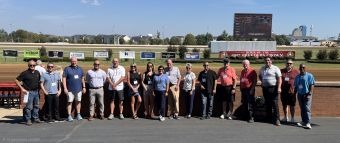
Led by USTA Chief Operating Officer TC Lane and USTA Racetrack/Licensing Manager and Corporate Secretary Michele Kopiec, the school provided more than 60 hours of classroom instruction, practical exercises and hands-on experience. Sixteen participants from the United States and Canada attended, including current and aspiring judges, stewards, racing investigators and other racing officials.
The curriculum covered USTA rules, pari-mutuel wagering, medication control, ethics, race review procedures, administrative hearings and public communication. Instruction from experienced racing officials was complemented by opportunities to observe race-day operations at The Red Mile.
Program Highlights
The opening day included a welcome from Kentucky presiding judge Casey Larson, followed by an overview of ROAP and the course requirements presented by Kopiec. Lane provided an introduction to the USTA, while USTA Director Sal DiMario, a retired judge and former executive director of the Delaware Standardbred Owners Association, discussed racing regulation and the responsibilities of judges and other officials. Kopiec also presented the USTA’s eTrack and FAS systems, highlighting the tools and reports available to judges.
On the second day, harness students joined students in the flat racing program at the Thoroughbred Training Center for a full day of medication instruction with Dr. Mary Scollay.
The third day began in The Red Mile race office, where Race Secretary Tina Seekman explained the process of accepting entries and assembling races. Larson outlined the presiding judge’s responsibilities during the draw. DiMario led the afternoon session on legal procedures and administrative hearings.
Pennsylvania Horse Racing Commission presiding judge Scott Egger conducted the fourth day’s harness race judging instruction, addressing racing through discussion and video review. The Thoroughbred Racing Protective Bureau also provided a presentation on the pari-mutuel wagering system.
On the fifth day, students shadowed officials throughout The Red Mile’s race-day operations. In the judges’ stand, they joined Larson and associate judges Jeff James and Dave Magee. Students also observed charter Julie DeMull and officials responsible for photo finish, paddock operations, horse identification, and the test barn.
Harness and flat racing students reconvened at the University of Kentucky Diagnostic Laboratory on the sixth day for legal instruction and processes led by Dr. Jennifer Durenberger, director of policy and industry initiatives for the Horseracing Integrity and Safety Authority.
The final two days were devoted to review sessions and five examinations: an oral examination involving racing scenarios, a video examination, and written examinations covering general harness racing, legal principles and medication.
“We appreciate the support of the KHRGC, The Red Mile and all of our volunteer presenters who helped make this school a success,” said Kopiec. “Along with classroom instruction, students gained hands-on experience with current and former racing officials, taking part in discussions, observing races and participating in race-day activities. It was a pleasure to host this group, and we wish them all the best as they continue their careers in racing.”
Participants who successfully complete all five examinations may become accredited under ROAP standards, which may qualify them for licensing as stewards or judges in most major racing jurisdictions.
ROAP is a collaborative effort among horse racing industry organizations to educate, train and accredit the officials who oversee the sport. For more information about accreditation, visit the ROAP website.